Showing posts with label Articles. Show all posts

Wednesday, November 13, 2013

Antrak Air Flight EU-KUL, on board to Tamale

I have had times to complain about the kind of customer service that our airlines offer us. Sometimes it either leaves you wondering whether it is a privilege to be using their airline or that you entered their plane by mistake.
An Antrak Air plane

On one of my journeys on (name withheld) airline, a tall and slim male flight attendant was so disrespectful to another passenger that I felt very bad. The passenger, a man younger than I, was seated next to me. We were the first from the back, as there was no one on the back row.

He had served us the usual packed light meal, turned and served those on the opposite side and just when he was about moving away, my seating mate tapped him on his arm in an attempt to draw his attention to himself. Apparently, he had just realised he needed some water.

Surprisingly, the host ignored him and went pass. I was so sad because I could see that the guy was embarrassed and uncomfortable. When the flight host returned and finished serving tea to one of the passengers, I excused him and asked why he had ignored the gentleman. In response, he asked me, arrogantly, whether it was right for the guy to touch him.

Monday, November 4, 2013

Who swallowed who - the sun or the moon?

Viewing an eclipse brings much excitement to children
It certainly wasn’t very exciting to me, since it was not the first time. For the kids, however, it was one of excitement. They had asked several questions about this so-called eclipse that was to happen and they checked outside several times to see any signs of the coming eclipse.

“Uncle Deen, would the place be dark,” my nephew asked. After answering him, another question followed: “would there be heat.”

Question after question until it finally happened and he and other kids in the house jumped and yelled as they took turns to watch it with the single pair of eclipse shades in the house.
 
I had managed to store that pair of shades since I bought it in 2006 in Accra to watch my first solar eclipse.

Tuesday, October 29, 2013

Where did SADA go wrong?

AS I wrote this piece my heart was bleeding. Angry voices blurred from my little radio set. I could hear a gentleman from a civil society group in Tamale swearing fire and brimstone should President John Mahama not axe Dr Charles Jebuni, who has been asked to act as Chief Executive Officer for the Savannah Accelerated Development Authority (SADA) following the exit of Alhaji Gilbert Iddi.
 
In 2010, the enthusiasm was at a crescendo as the SADA Law (Act 805, 2010) was passed and subsequently inaugurated to begin work. There had been so much rhetoric about the need for the establishment of a body to spearhead an agenda to quicken the pace of development in the north.
 
So the goose to lay the golden eggs was finally hatched and it became a popular refrain, particularly from politicians, that SADA would offer a quick fix to the problems of the north, such as unemployment, poor road networks, ailing agriculture, environmental degradation, high illiteracy, name them.
 
So what went wrong? What has happened to all the expectations and promises? How could a beautiful initiative suddenly go bad?

Wednesday, July 24, 2013

Northern Rural Growth Programme transforms agriculture in Northern Ghana

A dry season maize farmer in Jirapa
AGRICULTURE has over the years been noted as the backbone of Ghana’s economy.
More than 50 per cent of the country’s labour force was estimated to be in the agricultural sector, as indicated by the 2000 Population and Housing Census.
In spite of this, many farmers in Ghana remain poor, especially in Northern Ghana, which boasts of boundless agricultural potentials.
It was to address this problem that the Northern Rural Growth Programme (NRGP), an eight-year agricultural initiative, was formulated.

Savelugu School for the Deaf - saddled by poor infrastructure

THE Savelugu School for the Deaf is one of the country’s special schools that provide education to hearing-impaired children.
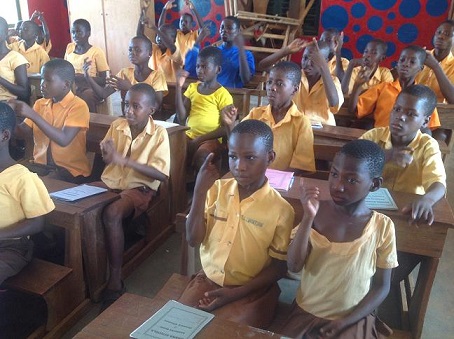
Some of the kids in class
 Established in March, 1978, the school was initially set up as a unit under the Nyohini Rehabilitation Centre in Tamale, but was subsequently moved to the Savelugu Middle Boarding School located in the outskirts of Savelugu.
Since then, the school has provided formal education to many hearing-impaired children, particularly from the three regions of the north.
During a visit to the school, the Daily Graphic observed that poor infrastructure and the delays in the release of subvention, among others, continue to impact negatively on academic work and the general wellbeing of the children.

Friday, June 21, 2013

Dr Susan Herlin, 18 years as Tamale's Chief of Friendship

Dr Herlin sitting in state in 1995
ON July 25, 1995, an American scholar of History, Dr Susan J. Herlin was installed as a chief in Tamale, the Northern Regional capital.
She was given the title 'Zo-Simli Naa', meaning 'Chief of Friendship'. It was a gesture by the people of Tamale to acknowledge the role she and others played in promoting the sister city relationship that was forged between Tamale and Louisville in the United States (US) in 1979.
By so doing, she became a symbol of this friendship, which has been growing ever since the parties shook hands.
It has been 18 years since this significant ceremony and for Dr Susan, life as a chief has been a humbling and learning experience.
"It has been an important part of my life," she told the Daily Graphic in an interview at her palace.

Tuesday, May 28, 2013

Leadership is a calling for me - Hikimat Baba


A TWENTY-THREE year-old graduate of the Kwame Nkrumah University of Science and Technology (KNUST), Ms Hikimat Baba Dua who has been nominated among Africa’s most outstanding emerging women leaders believes that she was born a leader.
“I think it is a calling,” Ms Baba Dua told the Daily Graphic, as if to re-echo Tupac Shakur’s famous controversial words “I think I’m a natural-born leader.”
According to her, throughout her life as a student, she had always had a passion to take up leadership positions and each time she tried, she ended up being successful.
Last week the Moremi Initiative for Women’s Leadership in Africa, after screening over 2000 applications, selected 28 young women from Africa and the Diaspora with outstanding leadership potentials as Fellows of its leadership programme.
Ms Baba Dua and another successful applicant, Ms. Mawuenana Yomekpe were the proud Ghanaians among the 28 young women.
A statement on the website of the Institute indicated that the Fellows were chosen through a highly competitive selection process after demonstrating outstanding leadership promise, community service accomplishments, and commitment to the advancement of women in Africa.

How do we resolve conflicts in the north - Views from Tamale


1.     Jemilatu Musah – National Service Personnel
The image of the north has been soiled by these prolonged conflicts. These conflicts have overshadowed the great culture and traditions of the north and so instead of the world talking about our Damba and Fire festivals, they rather talk about conflicts in the north.
For me, conflicts in the north could be blamed on the level of poverty in the area. Many of the people in deprived villages are very poor and depend largely on farming for their survival.
So they would go great lengths to fight for ownership over their farmlands, especially when they feel threatened.
The government must extend development projects to various parts of the north so as to create equal opportunities for people to be employed and live better lives.
When people are employed and educated, they are less likely to fight each other.

Playgrounds attract children to school


Children playing heartily at the playground
IT has been widely acknowledged that children in many communities are attracted to schools with a feeding programme.
As it is evident, schools benefiting from the Ghana School Feeding Programme (GSFP) have extremely high enrolment figures.
However, for pupils in some rural schools in the Northern Region that do not have a feeding programme, the presence of playgrounds in their schools gives them the urge to attend school each passing day.
One of such schools is the Dakpemyili Primary School in the East Gonja district, which is one of the few rural schools that boast of a playground with these facilities: seesaw, merry-go-round, slide and rope swing.

Monday, January 28, 2013

King's Village Nutrition Centre...Where malnourished children find hope


Some mothers and their malnourished kids at the centre
BONTANGA, a tranquil village in the Kumbungu district of the Northern Region, is popular for its irrigation dam, which was established several years ago to irrigate farms within its catchment.
A few kilometres away from this dam is another institution that should equally attract attention, especially from the development community.
It is certainly not a hotel or zoo but a charitable organisation that provides quality education, healthcare, water and sanitation services to the deprived communities in the Tolon and Kumbungu districts. 
Among the services that the King's Village offers, the one that touched me most was the provision of paediatric care and long term rehabilitation for children suffering from severe malnourishment.


Friday, October 26, 2012

My life depends on good harvest - groundnut farmer

Afa Alhassan being assisted by mom and auntie to dry his nuts

EACH year between August and October, one can see chains of women carrying sacks and pans filled with freshly harvested groundnuts and walking along dusty or muddy paths in villages in Northern Ghana.
It is that period of the year when groundnut farmers harvest their groundnuts, which were planted earlier in the year.
Groundnut or peanut happens to be one of the most farmed food crops in Northern Ghana due to its health, culinary and economic values.
In 2011, the Ministry of Food Agriculture (MoFA) indicated that the total output of groundnut produced in the three regions of the north accounted for about 80 percent of the nation’s total groundnut production.
In a recent trip to Zokuga, a farming community in the Savelugu/Nanton district of the Northern Region, I met with a 44-year old farmer who has been cultivating groundnut since childhood.

Tuesday, August 28, 2012

WOMEN RIDING MOTORBIKES WITHOUT HELMETS - a daily occurence in Tamale

TAMALE, the Northern Regional capital, could easily earn the reputation as the motor city of Ghana as the streets of this sprawling northern city is dominated by motorcycles of various kinds.
Unfortunately, wearing of helmets is the exception rather than the norm.
Each day, hundreds of motor riders take to the streets of Tamale meandering their way through chains of vehicles without crush helmets. Among these recalcitrant riders, we have children, youth and adults, many of whom are females.
It is difficult to decipher why a sane person, fully conscious of how crucial, but fragile, the human head is, would pick a motorbike, zoom off like thunderbolt, without a crush helmet for protection.
It is even more difficult to appreciate why women, who are perceived as more conscious of safety, would be riding motorcycles, although admiringly, without any protective gear.

TTH takes healthcare to Sagnarigu community

Some of the residents waiting to receive drugs
THE Tamale Teaching Hospital (TTH) is to intensify its efforts to take healthcare delivery to the doorsteps of communities in the Tamale metropolis and other parts of the Northern Region.
With the aid of its two mobile clinics, the TTH kicked off this initiative on Tuesday, when the mobile clinics made a stop at the Sagnarigu community, a suburb of Tamale.
A large number of people in and around Sagnarigu, many of whom were women and children, headed to the forecourt of the Sagnarigu Chief Palace, where the mobile clinics were stationed.

Saturday, August 11, 2012

When would Tamale Airport become international?


THREE years ago, the Tamale airport, 11 miles from the city centre, was a relatively quiet surrounding. Aside the military flights, just a handful of people were using this airport for domestic flights to Accra.
Today, the story is entirely different. Statistics sourced from airport authorities indicate that, averagely, 4000 passengers use this airport every month.

Sunday, July 22, 2012

From Jinhua to Nanning: A taste of Eastern China

A view of Central Shanghai from the Orienta
Pearl Tower
IT may not be as flashy as Shanghai or as popular as Beijing, but, certainly, Nanning, the capital of the Guangxi Province of China, has a character of its own.
Whilst in Shanghai skyscrapers do the talking, in Nanning, the abundant green vegetation speaks for the city. Almost every corner of this city has been decorated with trees, shrubs and all kinds of green architecture that does not only beautify the city, but gives it a natural and healing effect.
No wonder the people of Nanning prefer to call their city “the green city of China.”
A green park in Nanning
We had the opportunity to spend a number of days in this beautiful city during our recent visit to China for the seminar on “Think Tank for Anglophone Countries” which was organized by the Zhejiang Normal University (ZJNU) with sponsorship from the Ministry of Commerce of the People’s Republic of China (PRC).

Wednesday, January 25, 2012

REHABILITATING ZUJUNG CEMETRY - A COLLECTIVE RESPONSIBILITY


(Daily Graphic, Jan 24, 2012, page 19)

IF we were all destined to perish on the same day and time, we would not have to worry about how nice or dirty our cemeteries are, after all, making the cemetery neat would not bring any comfort to the dead.
The reality however is that we would die and be buried one after the other, so many of us would have to visit the cemetery on many occasions in our lifetime.
It therefore behoves on us to keep the cemetery in good condition so that each time we lose someone, we would not hesitate to visit the cemetery.
It is also incumbent on us to dignify the cemetery because there lay the remains of people we shared laughter, joy, pain and all manner of emotions with when they were alive.
On one morning, whiles on my way to work, I tuned to one of the local radio stations in Tamale, Zaa Radio, and heard an elderly man speaking about efforts that he and some other persons were making to build a fence wall to protect the Zujung cemetery.
I became interested in what these volunteers were doing, because the Zujung cemetery, located off the Tamale-Kumasi road, is the most popular graveyard in Tamale.
However, the current state of this cemetery leaves much to be desired, especially with regards to sanitation. Some people leaving near to the cemetery have turned it into a toilet and dumpsite.
Structures are being raised very close to the cemetery and, hence, the boundaries of the cemetery are being narrowed gradually. There are also no guidelines to bring orderliness in the digging of graves and so graves are located haphazardly on various portions of the graveyard.
It is surprising that in spite of the poor state of this cemetery, many people, including political and community leaders, go there regularly to bury their loved ones and yet have not made any effort at putting the cemetery in good shape.
So, later in the day, I drove to the cemetery and lo and behold, I saw four people busily putting up a fence wall.
But how much work can four people do on such a big burial site, I asked the leader of the group, 72-year old Baba Kisco and he said with divine providence, he was hopeful they would do the work till finish.
Mr Kisco said in 2009, he noticed that the cemetery was being encroached upon and he was deeply worried because he thought in future, there would not be any more space for burial.
“I began to make announcements in mosques appealing for support for the construction of a fence wall to protect the cemetery. I asked for cement, sand, water, and other items,” he said.
Baba Kisco said the response was slow in coming but as the months rolled into years, and the years went by, he was able to mobilise a number of these items and therefore decided to start the project.
He said in early 2011, he and three others – Abukari Munkaila, Nanumdoo Fuseini and Tahiru Fuseini – moulded 10,000 blocks.
In November that same year, they finally decided to dig the foundation and raise the wall beginning from the Northern side of the entrance to the cemetery. Till date, if you visit the cemetery, you would find them there working feverishly.
Mr Kisco pointed out that although the four of them were physically engaged in the work, they were being supervised by the Chief Imams of Tamale Central Mosque and Afajura Mosque, Alhaji Abdul-Salam and Alhaji Seidu Abubakari Zakaria, respectively.
He said occasionally, somebody would come to join hands and later disappear, explaining that some people fear to work at the cemetery.
Baba Kisco said since the work begun, the support has not been coming consistently.
“Once in a while, somebody would bring us some bags of cement or trips of sand,” he said, adding that he owed so much gratitude to some food vendors in town who have continued to provide them food during the work.
Mr Kisco said he was very optimistic that the work would be executed till finish if they get adequate cement, iron rods, river sand, aggregate, tanks, water, wheel barrow, shovels, pick axe and other construction materials.
I asked the four volunteers if the Tamale Metropolitan Assembly (TaMA) had offered them any form of support and they indicated that the assembly provided part of the construction materials, although the MCE, Alhaji Haruna Friday had not yet visited the project site.
As the conversation with the four people progressed, a group of people brought the remains of a loved one to bury and we joined them to bid farewell to the deceased.
When we returned to the project site, the four people made me understand that the construction of the fence wall was not the only thing they were doing to keep the cemetery in good shape.
“Each year, we come together to weed the grass in the cemetery. We have been doing this since 1997,” Baba Kisco said, adding that the four of them have been doing community service for a long time.
In fact, the four of them were the brains and hands behind the rehabilitation of sanitary facilities at the morgue of the Tamale Teaching Hospital (TTH).
Meanwhile, some casual labourers engaged by the TaMA to undertake burial activities at the cemetery told this paper that they were witnesses to the good work being done by the four volunteers.
One of them, Mr Abdul-Kahad said the construction of the fence wall would not only stop encroachment, but also keep away unscrupulous persons who visit the cemetery to attend to nature’s call and to do illicit activities, like ‘juju’.
When the Daily Graphic spoke to the Public Relations Officer (PRO) of TaMA, Mr Issah Musah, he said the assembly had not shirked its responsibility towards keeping the cemetery in good shape.
“The construction of a fence wall had always been on the drawing board of the assembly, until an individual by name Yaho Yaho galvanised support to commence the project,” the stated.
He said the assembly was collaborating with Yaho Yaho to construct the fence wall.
The reality however remains that when you go to the project site, it is not a contractor or assembly officials who are there constructing or supervising the work. It is Baba Kisco and his team.
It is therefore high time that the assembly and other corporate institutions, politicians, chiefs and other inhabitants contribute their quota towards making the Zujung cemetery a decent place.
For those who have already done so, May Allah bless them abundantly.

Monday, January 9, 2012

SAVE FOREST RESERVES IN NORTHERN REGION

(Daily Graphic, Jan 9, 2012, page 20)

THE importance of forests to human life cannot be overemphasized. According to agric scientists, forests, apart from conserving nature, are a source of life.

They purify the air that we breathe, serve as habitat for the animals that we feed on, and preserve climatic temperatures to protect our bodies. In Africa, in particular, forests are the main source of herbs and many of the food we eat.
Experts have also noted that forests play a crucial role in helping mitigate the impact of climate change on humans.
Some illegally-sawn timber that were recently seized in Saboba
According to the Director of the United Nations (UN) Forum on Forests Secretariat, Mr Pekka Patosaary, forests can act as a ‘sink’ to absorb greenhouse emissions and store large quantities of carbon for extended periods of time.
No wonder the developed world is now committing itself to invest in afforestation projects in Africa under the United Nations’ Reducing Emissions from Deforestation and Forest Degradation (REDD) initiative.
One is therefore at a lost why forests in the Northern Region of Ghana are being depleted at such an alarming rate, in spite of how essential they are to the livelihoods of the people in the region.
Checks at the Forestry Commission indicate that there are 24 forest reserves in the Northern Region.
The region even boasts of having the largest forest reserve in Ghana, the Yakombo Forest Reserve, near Buipe, which occupies an estimated land area of 1,160km².
Each year, more trees are planted in various parts of the region so as to create new or replenish existing woodlots and forest plantations.
Currently, the Forestry Services Department (FSD) of the Forestry Commission is establishing large acres of forest plantations in various parts of the region through the National Forest Plantation Development Programme.
During a recent visit to the Northern Region by the Parliamentary Select Committee on Lands and Forestry, the Northern Regional Forestry Manager, Mr Ebenezer Djaney Djagbletey, revealed that the region had exceeded its targets for the plantation programme.
“A total area of 3,309 hectares had been planted by the end of December, 2010, which is far higher than the 2000 hectares target that had been set,” he told the committee.
He said in Yendi alone, a total area of 1,126 hectares was planted in off-reserve areas and 200 hectares in existing forest reserves.
In Tamale, a total area of 462 hectares was planted in off-reserve areas, whiles 70 hectares of areas located within forest reserves had been planted.
In spite of all these glamorous statistics about the establishment of large acres of forest plantations, the question to ask is “how many of these trees would survive?”
How many would become prey to the painful blade of chain-saw operators and how many would crumble when the dry season fires start?
Statistics from the EPA paint a gloomy picture about the depletion of forest resources in the Northern Region.
According to the EPA, the region loses 38, 000 hectares of its tree cover every year due to activities such as indiscriminate bush burning, deforestation, use of chemicals in fishing, over grazing by livestock and illegal commercial logging.
Just recently, the FSD intercepted large quantities of illegally sawn rosewood, which had been felled from forest plantations in the Saboba district.
Due to the depletion of forests and the vegetation, some parts of the region are being reduced to desert-like conditions and this has caused a reduction in food and water resources and also increased the intensity and duration of droughts and disasters in the north.
It is sad to note that many community folk do not seem to know about the harm they cause to the environment and future generations when they run down forest resources.
The extent to which they cut down trees for firewood and to make space for farming and settlements exposes the region to desertification.
Unfortunately, forest conservation issues do not receive adequate attention from local government authorities and politicians in the region.
Under the noses of District Chief Executives, Members of Parliament, Co-ordinating Directors and traditional rulers, forests are destroyed and no one seems to border.
It is high time that the nation’s leaders and the entire populace were reoriented on the importance of forests and the need to conserve them.
Politicians, chiefs and opinion leaders in the region must stand up now to protect the region’s forests and not wait for calamity to befall us.

UNDERSTANDING SADA IS CRUCIAL TO ITS SUCCESS

(Daily Graphic, Jan 9, 2012, page 10)

IT is understandable why the establishment of the Savannah Accelerated Development Authority (SADA) was greeted with much delight among some sections of the Ghanaian population, particularly those from the northern Savannah areas.
The North has remained backwards for a long time in terms of development and this has been blamed largely on an old colonial policy which resulted in a situation where development efforts were centred in the south.
After independence, however, it was realised that the lack of development of the north was a bane to the progress of the country in general.
For instance, the low standard of education in the north meant a high level of illiteracy in that area.
The lack of development in the north also resulted in the mass migration of a large army of unemployed youth to the southern sector to seek job opportunities, and consequently leading to over population in cities like Kumasi and Accra, thereby eroding the development gains made in the south.
A number of interventions were therefore introduced to reduce the development gap between the south and the north. Although, many of these achieved some success, they were not enough to bring about the desired transformation of the north.
This re-echoed the need for a much more pragmatic, sustainable and well-strategized development blueprint for the north.
Many therefore heaved a sigh of relief when the government introduced the SADA Bill to parliament, which was consequently passed into law after there was general consensus on the relevance of this body.
The SADA Law (Act 805, 2010) mandates the authority to work towards bridging the development gap between the Northern Savannah Ecological Zone and the rest of the country.
This zone, which is considered the food basket of the country, comprises the Northern, Upper East, Upper West and parts of the Brong Ahafo and Volta regions.
Subsequently, the government constituted and inaugurated a board to oversee the affairs of SADA. A former Northern Regional Minister, Alhaji Gilbert Seidu Iddi, was later appointed to run the day to day operations of SADA as the Chief Executive Officer (CEO).
So finally, here is the much awaited development machine for the north.
However, it has become obvious that many people are still dissatisfied. This time, the dissatisfaction is not about government’s inaction in developing the north, but the failure of the newly-established SADA to hit the ground running.
Those who are discontented claim they are yet to see any physical signs of the impact of this authority, in spite of the launch of the Millennium Villages Project (MVP).
Of course, how can you begrudge them? It was the daily language of politicians that SADA would offer a quick solution to the problems of the north, such as unemployment, poor road networks, ailing agriculture, environmental degradation, high illiteracy, name them.
As a result, many northern folk nurtured high expectations about the performance of the then yet-to-be-created SADA. Therefore, failure to see these promises materialise would ultimately generate some disillusionment.
In fact, some have also raised concerns over the failure of government to adequately resource SADA as promised earlier.
My role as a journalist however gives me a unique opportunity to approach this issue from a different perspective.
From my layman’s diagnoses, there is deep misunderstanding among the northern Ghanaian population – be they literates or illiterates – about the mandate of SADA.
This deep-seated misunderstanding has the tendency to affect the credibility of SADA and the government as well. It can erode public confidence in the ability of SADA to transform the north, and lead to a situation where people’s preconditioned minds tend to affect their co-operation with the authority.
SADA, as I understand, was not established to carry out development works all by itself. SADA would neither go to the farms to till the lands, plant and harvest the food, nor would it pick up graders to work on the deplorable roads.
If SADA needs to do some research or feasibility studies into a particular area of intervention, it would not be the one to do it. It would have to work with other institutions that have the capacity to do so, such as the University for Development Studies (UDS) and the Savannah Agricultural Research Institute (SARI).
Again, SADA is not a project that would elapse within a stipulated time and it is not a replacement to all other development programmes in the north.
It would also not be a replacement to the various decentralised bodies or to the National Development Planning Commission, the Ministry of Food and Agriculture (MOFA), the Ministry of Roads and Highways, etc.
Thus, the establishment of SADA does not mean that all resources and funds allocated for the development of the Savannah areas would be channelled to it.
In fact, my understanding is that SADA is an engine that has been built by seasoned economic and development ‘engineers’ with the sole purpose of fast-tracking the development process in the north, just like how the engine of an automobile keeps it moving.
It is a permanent body that would link up with all institutions that are working towards the development of the north and offer strategic leadership and direction to the development process in the north.
By so doing, SADA would ensure that all these institutions focus on the very essential areas and that there is coordination, but not duplication.
SADA would be the magnet that would attract development funds for the north. It would therefore ensure that these funds reach the institutions that are responsible for carrying out the various interventions.
It would as well supervise, monitor and ensure the success of these projects and also ensure the sharing of best practices.
So, in effect, the workings of SADA would ultimately do away with the current situation where the development process in the north is so haphazard and lacks direction.
For me, therefore, it thus not matter how much money government gives to the SADA secretariat, because SADA thus not need to carry out the interventions all by itself, except to ensure that funds are made available for the various initiatives.
Giving a lot of money to SADA at this crucial moment would be like putting the cart before the horse. The plans and linkages must come first, before funding is made available.
The point must, however, be made that the SADA secretariat requires some amount of funding for administrative purposes; but more importantly, it requires the support of the country’s political leadership and that of civil society and the private sector.
I dare say that the failure of SADA would start the day it begins attempting to ‘do it all’. Let us guide against this, otherwise we would get to a point one day when this body is unable to do everything and yet all others might have abandoned their roles and watching from the fence.